Paid Creator Ads, Financial Education and AI Scam Opportunities – FIN Weekly Update:
The creator economy keeps changing, but not every new development requires creators to change what they are doing.
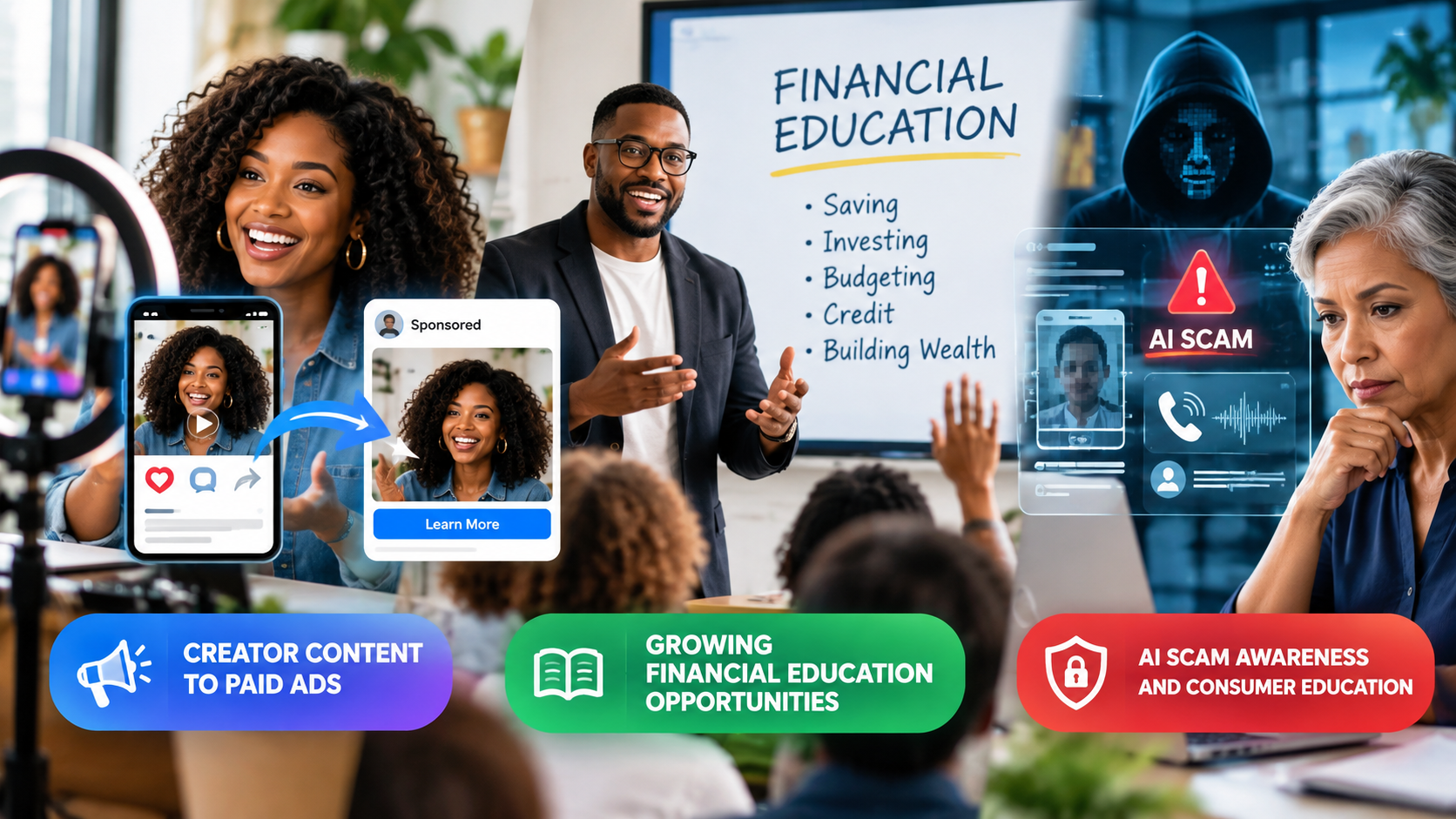
This week, three trends are worth knowing about for members of the Financial Influencer Network: brands are finding easier ways to turn successful creator content into paid advertising, demand for financial education continues to grow, and banks are putting more attention on educating consumers about AI-powered scams.
For FIN members, the biggest takeaway is simple: there are more ways for your expertise and content to be valuable.
There are no new requirements, platforms you need to join, or analytics tools you need to buy.
Here is what is happening.
Successful Creator Posts Can Become Paid Ads More Easily
Social platforms and affiliate companies are making it easier for brands to identify creator content that performs well and then turn that content into paid advertising.
In simple terms, imagine you create a video recommending a product. People respond to it, click on it, or buy something because of it.
A brand may then decide:
“This works. We want to put advertising dollars behind it.”
That can create an additional opportunity for the creator.
But creating the original post and allowing a company to use that post as paid advertising are not necessarily the same thing.
Creators should understand what a brand wants to do with their content, how long the advertising will run, where it will appear, and whether additional compensation is appropriate.
For FIN members, there is nothing new you need to do today.
FIN will continue helping members evaluate these opportunities when they arise.
Financial Education Is Becoming a Bigger Opportunity
Financial literacy continues to receive increased attention from schools, government agencies, financial institutions, nonprofits, and community organizations.
Recent national and state-level initiatives have emphasized areas including:
- saving and investing
- financial education for young people
- digital financial literacy
- fraud and scam prevention
- practical financial decision-making
That matters because financial education is no longer limited to articles, social media posts, or one-time speaking engagements.
Organizations may need experts who can:
- teach workshops
- participate in webinars
- create educational videos
- speak at community events
- help develop curriculum
- train educators
- explain complicated financial topics in plain language
Many FIN members already have the expertise required to do this work.
The opportunity is to think more broadly about how that expertise can be used.
You are not simply a creator with an audience.
You may also be an educator, spokesperson, instructor, author, subject-matter expert, or program partner.
Banks Are Paying More Attention to AI Scams
Artificial intelligence is also changing financial fraud.
Consumers are increasingly being warned about scams involving fake voices, manipulated videos, impersonation, and other forms of AI-generated deception.
Banks and other financial institutions have a strong reason to educate their customers about these threats.
That creates another potential opportunity for trusted financial experts.
Someone still has to explain questions such as:
- How can you tell whether a message is legitimate?
- What should you do if someone appears to be impersonating a family member?
- How are scammers using artificial intelligence?
- What should consumers do before sending money?
- How can families protect older adults and young people from new scams?
These are not simply technology questions.
They are trust and financial education questions.
And trusted experts who can explain them calmly and clearly may become increasingly valuable.
What Does This Mean for FIN Members?
For now, there is nothing additional you are required to do.
There are:
- no new FIN platform requirements
- no new analytics subscriptions you need to purchase
- no new performance scores
- no new reporting requirements
- no new deadlines
Instead, FIN is monitoring how these changes may create opportunities for members.
A company may want to turn one of your successful posts into advertising.
A school or nonprofit may want you to teach.
A bank may want you to help explain scams or another financial topic.
A financial institution may need an expert for a campaign, webinar, community event, or educational program.
FIN’s role is to help identify opportunities that fit the expertise of our members and help structure those opportunities appropriately.
The Bigger Picture
One of the most important changes in the creator economy is that brands increasingly want more than access to an audience.
They want credible people who can:
- explain difficult subjects
- educate consumers
- communicate clearly
- build trust
- create useful content
- represent complicated ideas responsibly
That is especially important in financial services.
Follower counts can help describe an audience.
They do not replace expertise, credibility, experience, or trust.
Those qualities remain a major part of what FIN members bring to the marketplace.
We will continue monitoring developments in creator partnerships, financial education, financial services, technology, licensing, and other areas that may create meaningful opportunities for the network.
Sources
- TikTok, “How TikTok and ShopMy Turn Proven Creator Content Into Spark Ads”, September 30, 2026.
- U.S. Department of the Treasury, “The Financial Literacy and Education Commission Releases the 2026 Update to the U.S. National Strategy for Financial Literacy”, October 2, 2026.
- National Endowment for Financial Education, “Report Card: Nation Moving To Ensure Personal Finance Education For All Public High School Students”, October 1, 2026.
- American Bankers Association, “ABA, America’s Banks Relaunch #BanksNeverAskThat Campaign With New ‘Scam Slayer’ Initiative, Resources on AI-Powered Scams”, October 1, 2026.
Frequently Asked Questions
Can a brand use my social media post as an advertisement?
A brand may ask for permission to use creator content in paid advertising. The exact rights, duration, platforms, approvals, and compensation should be addressed as part of the specific partnership.
What types of financial education opportunities might become available?
Potential opportunities can include speaking, webinars, workshops, educational videos, curriculum development, community programs, media appearances, and other forms of expert-led financial education.
Why are AI scams relevant to financial influencers?
Consumers increasingly need trusted experts who can explain how scams work and how people can protect their money. Financial educators may be well positioned to help banks, nonprofits, schools, and other organizations communicate this information.